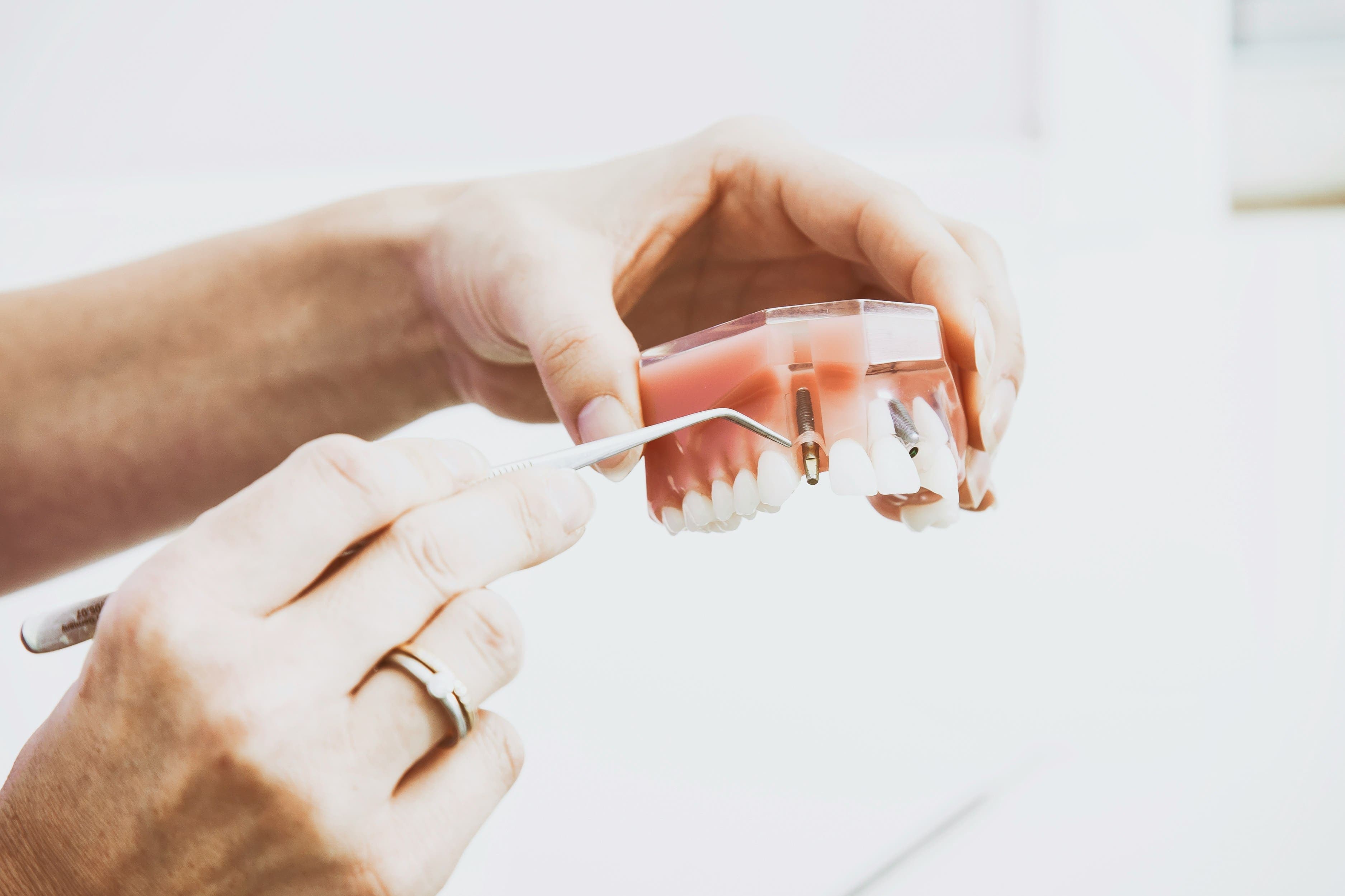
Dental implant model showing a replacement tooth

Replacing missing teeth

Replace Missing Teeth with Dental Implants in Leeds

Dental implants can support a single crown, replace several teeth with a bridge or help secure a denture. Care starts with detailed planning around your bone, gums, bite and long-term goals.

Consultation

X-rays included where clinically indicated

£20
Not sure what you need?

Talk it through with our team

Opens WhatsApp in a new tab.

What to know

What a dental implant actually replaces

An implant is the fixture placed in the jaw. An abutment connects it to the visible replacement: usually a crown for one tooth, a bridge for several teeth, or an attachment that helps hold a removable denture more securely.

Planning considers the amount and quality of bone, gum health, the space between neighbouring teeth, the bite, smoking, medical conditions and medicines. A scan or additional imaging may be needed to assess anatomy before surgery.

Different types of implant restoration

A single-tooth implant supports one crown without using the neighbouring teeth for support. An implant bridge uses implants to replace several adjacent teeth. Implant-retained dentures remain removable but use implant attachments for added stability. A full-arch fixed bridge can replace a complete row of teeth using several implants; it requires detailed surgical and restorative planning.

  • Single implant with a crown
  • Implant-supported bridge for several missing teeth
  • Implant-retained removable denture
  • Fixed full-arch implant bridge

What can happen if a gap is left

Leaving a gap is sometimes a reasonable choice, particularly if appearance, chewing and tooth position are unaffected. In other cases neighbouring teeth may tilt or drift, the opposing tooth may move into the space, food can collect more easily, and chewing can shift to one side.

Bone in the area commonly reduces after a tooth is lost because it no longer receives the same stimulation. This can make later implant placement more complex, although the amount and clinical importance vary. A dentist can compare replacing the tooth now, monitoring the space, or accepting it.

The stages of implant treatment

Care usually involves assessment and imaging, placement of the implant, a healing period while it integrates with bone, and fitting the final crown, bridge or denture attachment. Some patients need tooth removal, gum treatment or bone grafting before or during implant placement.

Ask who will provide each stage, how a temporary gap will be managed, how long healing is expected to take and what maintenance is needed after the final restoration is fitted.

Understanding costs

A Leeds consultation costs £20 and includes X-rays where clinically indicated. Implant treatment costs are discussed after the appropriate pathway and scope of care have been established for the individual.

Ways implants may support replacement teeth

A dental implant is a fixture placed in the jaw bone that may support a single crown, a bridge or, in selected cases, a removable denture. The visible tooth is a separate restoration attached after planning and healing.

Some people need preparatory care or a staged pathway. Bone quantity, gum health, the space available, general health and proximity to anatomical structures all affect what can be considered.

Alternatives to implants

A conventional bridge may replace a missing tooth using neighbouring teeth for support. A removable partial or complete denture may replace several teeth. In some situations, accepting a space is reasonable.

Each option differs in invasiveness, maintenance, effect on other teeth, longevity and cost. The appropriate comparison is individual rather than a claim that implants are always best.

What to expect

A staged implant assessment and planning process

  1. 01

    Assessment

    Review dental and medical history, smoking, gum health, the missing-tooth space and your expectations.

  2. 02

    Planning

    Clinically indicated imaging and records help assess anatomy; further tests or referral may be needed.

  3. 03

    Treatment stages

    If suitable and available, surgical and restorative stages are planned with healing periods explained in advance.

  4. 04

    Maintenance

    Implants and their restorations need daily cleaning, professional review and prompt investigation of bleeding, pain or looseness.

Balanced information

Understanding benefits, commitments and risks

Potential benefits

  • Can support a replacement tooth without preparing adjacent teeth in some cases.
  • May improve stability compared with some removable options.
  • Can support single or multiple replacement teeth when anatomy and health are suitable.

Risks and disadvantages

  • Surgery carries risks including pain, swelling, infection, bleeding and damage to nearby structures.
  • Integration with bone can fail, and later gum or bone disease can threaten an implant.
  • Treatment can be lengthy, may need additional procedures and requires lifelong maintenance.

Alternatives to discuss

  • A resin-bonded or conventional bridge where suitable.
  • A removable partial or complete denture.
  • Leaving the space, with discussion of functional and dental consequences.

Caring for an implant and restoration

Implants cannot develop tooth decay, but the surrounding tissues can become inflamed and lose supporting bone. Cleaning around every surface and attending recommended maintenance are central to long-term care.

  • Follow post-operative instructions if surgery is undertaken.
  • Clean around the implant with tools and techniques demonstrated for you.
  • Report persistent bleeding, swelling, pain, a bad taste or movement of the implant restoration.

Further reading

Trusted patient guidance

Consultation

Start with a clear assessment.

Tell us what you need help with. Your dentist will assess your needs and explain the appropriate next steps before any treatment is agreed.

Consultation fee

£20

X-rays included where clinically indicated

Ready to talk it through?

Contact the team to discuss your concern and current appointment availability.

Good to know
Questions patients often ask

Straightforward answers to help you prepare for an assessment.

Suitability is individual and requires clinical assessment. Oral health, general health, the area involved and other findings may all influence which options can be considered.

Implants may support a single crown, a bridge replacing several teeth, a removable implant-retained denture or a fixed full-arch bridge. The number and position of implants are planned around the missing teeth, bone, bite and type of final restoration.

A gap can sometimes be monitored, but nearby teeth may drift or tilt, an opposing tooth may move, food may collect and bone in the area can reduce over time. The importance of these changes depends on the location of the gap, bite and surrounding teeth.

The team should identify the proposed clinician after assessment. Ask about their role, qualifications and experience, who would provide each stage, and whether any part of care would require referral.

No timeline can be responsibly stated without assessment and an agreed plan. The stages and timing depend on the individual situation and the care considered appropriate.

A Leeds consultation costs £20 and includes X-rays where clinically indicated. Implant treatment prices and any available payment options should be discussed after assessment.

Yes. An implant may fail to integrate or may later be affected by infection, gum and bone loss, overload or component problems. Good planning and maintenance reduce risk but cannot eliminate it.

No. It depends on the available bone and the proposed plan. If grafting appears necessary, the dentist should explain why and whether it can be provided within your pathway or requires referral.

There is no guaranteed lifespan. Health, smoking, cleaning, gum stability, bite forces, restoration wear and attendance for maintenance all influence longevity.

Send an enquiry

Tell us how we can help.

Share your contact details and a brief description of what you need. The team will respond using the details you provide.

For urgent symptoms, call instead. Call 999 or go to A&E if swelling affects breathing or swallowing, bleeding will not stop, or there is a serious facial or jaw injury.

Please do not include detailed medical histories, medication lists or sensitive information in your message. The clinical team can collect relevant information safely.