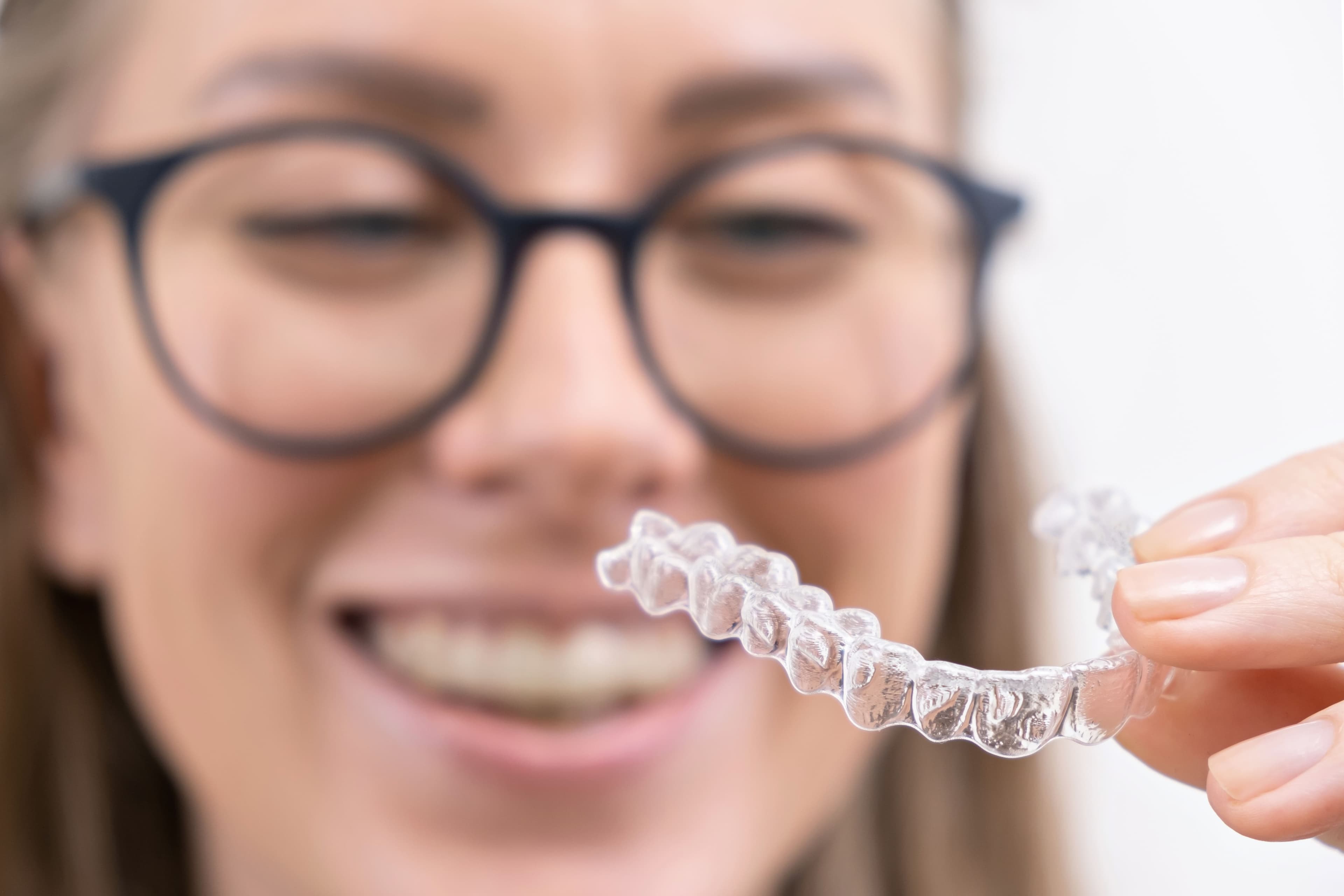
Invisalign clear aligners for straighter teeth

Clear-aligner enquiries

Straighter Teeth with Invisalign in Leeds

Clear, removable aligners can gradually improve crowding, spacing and selected bite concerns. Your treatment is digitally planned, professionally monitored and followed by retention to help maintain the result.

Consultation

X-rays included where clinically indicated

£20
Not sure what you need?

Talk it through with our team

Opens WhatsApp in a new tab.

What to know

Is Invisalign the right route for you?

Invisalign aligners apply controlled pressure to move teeth gradually. Small tooth-coloured attachments may be bonded to selected teeth to help particular movements, and some plans use elastics or create a small amount of space between teeth.

Suitability depends on the position of your teeth, the way your jaws meet, gum and bone health, previous dental work and whether you can wear the aligners consistently. More complex movements may be better treated with fixed braces or specialist orthodontic care.

Daily life with clear aligners

Aligners are removed for meals, most drinks and cleaning, then replaced promptly. They generally need near-full-time wear to work as planned. Teeth should be cleaned before the aligners go back in where practical, and the trays should be kept away from hot water that could distort them.

Why treatment length varies

Treatment length depends on how far teeth need to move, the complexity of the bite, how consistently aligners are worn and how the teeth respond. Refinement aligners may be needed after the first planned sequence. Once active treatment is complete, retainers are needed because teeth naturally tend to move again.

Making an informed decision

Ask who would provide the care, what monitoring would involve, the likely commitments and how costs would be explained. These details should be confirmed for your individual pathway before you proceed.

What clear aligner treatment involves

Invisalign uses a prescribed series of removable clear aligners to apply controlled forces to teeth. Treatment may also involve tooth-coloured attachments, small amounts of space creation or elastics where clinically indicated.

Aligners usually need to be worn for most of the day and changed according to the clinician’s plan. They are removed for eating, drinking anything other than water, and cleaning.

Cases and alternatives

Clear aligners can address some crowding, spacing and bite concerns, but not every movement is best managed this way. Complexity, gum and bone health, previous dental work and willingness to wear aligners all affect suitability.

Alternatives can include fixed braces, another aligner system, limited cosmetic care, or no treatment. A specialist orthodontic opinion may be appropriate in more complex cases.

What to expect

The clear-aligner pathway

  1. 01

    Suitability assessment

    Discuss goals and history, and assess teeth, gums, bite and the type of movement required.

  2. 02

    Records and plan

    Appropriate photographs, scans and X-rays support planning; a digital preview is a simulation, not a guaranteed result.

  3. 03

    Active treatment

    Wear aligners as prescribed, attend monitoring visits and report lost, damaged or poorly fitting aligners.

  4. 04

    Retention

    Retainers are normally needed after active treatment because teeth can move again over time.

Balanced information

Is a removable aligner right for your routine?

Potential benefits

  • Aligners are removable for meals and oral hygiene.
  • They are less visually prominent than many fixed appliances.
  • Digital planning can help explain intended tooth movements.

Risks and disadvantages

  • Success depends heavily on wearing aligners as instructed.
  • Temporary pressure, speech changes, excess saliva or mouth irritation can occur.
  • Attachments may be visible; refinements can be needed and the predicted result is not guaranteed.

Alternatives to discuss

  • Fixed metal or ceramic braces.
  • Other aligner systems where available and appropriate.
  • Accepting the current tooth position or discussing limited cosmetic alternatives without disguising an unhealthy bite.

Aligner care and retention

Clean teeth before replacing aligners where practical, and clean aligners with the method advised by the clinician. Hot water can distort them. Retainers after treatment are essential to reduce relapse, but they do not remove the possibility of future movement.

  • Wear each aligner and retainer exactly as prescribed.
  • Keep appliances safely in their case when removed.
  • Contact the clinical team if an aligner is lost, cracks, causes a persistent sore area or no longer fits as expected.

Further reading

Trusted patient guidance

Consultation

Start with a clear assessment.

Tell us what you need help with. Your dentist will assess your needs and explain the appropriate next steps before any treatment is agreed.

Consultation fee

£20

X-rays included where clinically indicated

Ready to talk it through?

Contact the team to discuss your concern and current appointment availability.

Good to know
Questions patients often ask

Straightforward answers to help you prepare for an assessment.

No. Suitability depends on an individual assessment of oral health, the movement being considered and other clinical factors. Another approach may sometimes be more appropriate.

Duration varies and no timeframe is promised on this page. A clinician needs to assess your starting position and proposed movement before discussing an individual estimate.

Ask the team which clinician would carry out your assessment and, if you are suitable, provide treatment. You can also ask about their role, qualifications and experience before deciding whether to proceed.

A Leeds consultation costs £20 and includes X-rays where clinically indicated. Invisalign treatment costs and what they include should be confirmed after suitability and planning are discussed.

Yes. We offer same-day appointments and can begin treatment at the same visit once your dentist has completed the assessment, explained the plan and you have chosen to proceed.

The exact instruction is set by the treating clinician, but clear aligners generally require near-full-time wear and are removed for eating, most drinks and cleaning. Suitability depends partly on being able to follow that routine.

Teeth have a natural tendency to move after orthodontic treatment. Retainers help hold the corrected position; long-term wear and replacement should be discussed before starting.

No. It is a planning simulation. Biological response, wear, missed appointments and the complexity of movement can affect progress and the final result.

Send an enquiry

Tell us how we can help.

Share your contact details and a brief description of what you need. The team will respond using the details you provide.

For urgent symptoms, call instead. Call 999 or go to A&E if swelling affects breathing or swallowing, bleeding will not stop, or there is a serious facial or jaw injury.

Please do not include detailed medical histories, medication lists or sensitive information in your message. The clinical team can collect relevant information safely.